
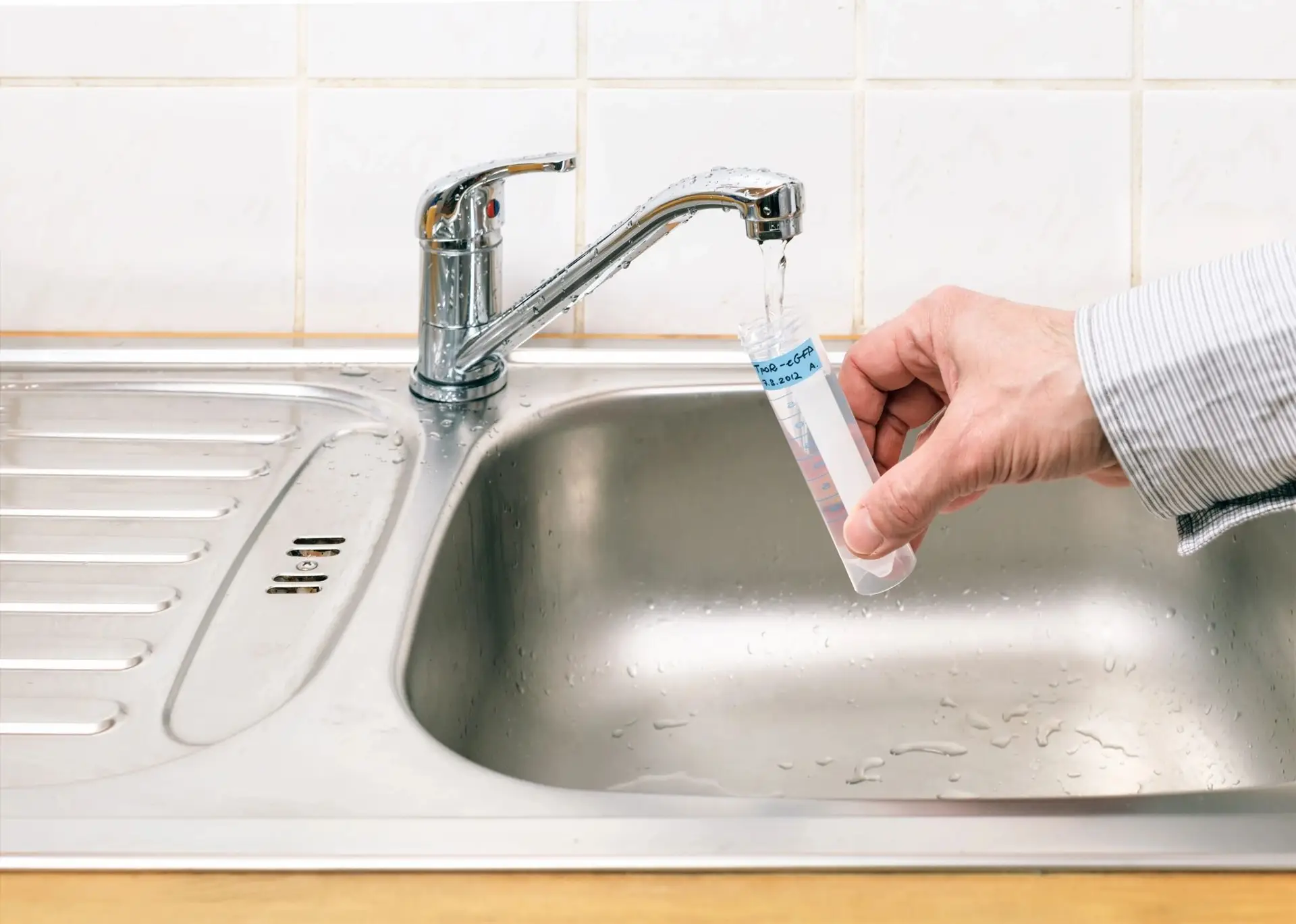
Private wells don’t operate in a vacuum. They respond to weather, land use, and time. That means your well water quality is not static. It changes with the seasons, sometimes subtly, sometimes fast enough to create real risk. Most homeowners treat well testing as a one-time event tied to a real estate transaction. That’s a mistake.
Let’s think about this the right way. Your well is a direct line into the groundwater system beneath your property. Whatever moves through that system, eventually moves into your home.
Spring: Recharge and Contamination Pathways
Spring is where problems begin. Snowmelt and heavy rains recharge groundwater, which sounds positive until you consider what that water is carrying. Surface contaminants get pulled down through the soil profile and into aquifers.
This is when bacteria becomes a real concern. Total coliform and E. coli levels tend to spike after heavy precipitation events. The U.S. Environmental Protection Agency notes that private wells are particularly vulnerable to microbial contamination following flooding or runoff events.
Nitrates follow the same pattern. Fertilizer application ramps up in the spring, and rainfall pushes those compounds into groundwater. Elevated nitrate levels are especially dangerous for infants, leading to conditions like methemoglobinemia. The Centers for Disease Control and Prevention specifically recommends testing well water annually for nitrates, with additional testing after flooding or land disturbance.
Summer: Concentration and Biological Activity
By summer, water levels often drop, especially in areas with sustained heat. Lower water tables can concentrate contaminants. What was diluted in spring can become more potent in July and August.
Warm temperatures also accelerate biological activity. Bacteria don’t just appear in spring, they thrive in summer. If your well system has any vulnerabilities, cracked casing, poor sealing, or surface intrusion, this is when those weaknesses show up.
This is also the season where PFAS starts to get more attention. Not because it appears suddenly, but because homeowners are more likely to test when usage increases. PFAS, often called “forever chemicals,” persist in groundwater and are linked to long-term health risks. The Environmental Working Group maintains a national database showing widespread PFAS contamination across the United States, including private well exposure risks.
Fall: Agricultural Residuals and System Stress
Fall doesn’t get enough attention, but it should. This is when agricultural runoff stabilizes into groundwater systems. Whatever was applied in spring and summer has now had time to migrate.
Nitrates remain a concern here, but so do pesticides and other residual compounds. While not always part of a standard water test, the presence of nitrates often acts as a proxy indicator that other contaminants may be present.
From a systems perspective, fall is also when wells start to experience mechanical stress. Pumps cycle differently as water demand shifts, and older systems can begin to fail quietly. A drop in pressure or change in water clarity often shows up here before winter locks everything in place.
Winter: The Illusion of Stability
Winter gives homeowners a false sense of security. Groundwater movement slows, and contamination events are less obvious. But that doesn’t mean risk disappears.
In fact, winter is when existing contamination sits. If bacteria, nitrates, or PFAS are already present, they remain in the system, often undetected. Frozen ground can also create structural issues around the wellhead, especially if grading or drainage is poor.
This is also the best time to test from a baseline perspective. You’re seeing your water without the influence of recent recharge events. That gives you a clearer picture of what’s consistently present.
PFAS: The Constant Variable
Unlike bacteria or nitrates, PFAS doesn’t follow a clean seasonal pattern. It’s persistent. Once it’s in your groundwater, it stays there.
That’s why it deserves separate attention. The U.S. Environmental Protection Agency has established increasingly strict health advisory levels for PFAS in drinking water, measured in parts per trillion. That’s not a margin for error. That’s a signal that even trace amounts matter.
For homeowners on private wells, there is no regulatory safety net. No municipality is testing your water. No one is notifying you of changes. If you’re not testing, you’re guessing.
What This Means Operationally
Seasonal testing isn’t about checking a box. It’s about understanding how your water system behaves over time.
At a minimum:
- Test annually for bacteria and nitrates
- Test after major weather events, especially flooding
- Establish a baseline test in winter
- Add PFAS testing based on regional risk and property history
The National Ground Water Association reinforces this approach, recommending routine testing and additional checks tied to environmental changes and system performance.
The Bottom Line
Water quality is not static, and your well doesn’t care about your closing date. It responds to weather, land use, and time.
If you’re treating water testing as a one-time transaction, you’re missing the point. The risk isn’t theoretical. It’s seasonal, predictable, and in many cases, preventable.
Focused Property Inspections handles comprehensive well and water testing, including bacteria, nitrates, and PFAS. One appointment. One report. Real answers.
Sources:
- U.S. Environmental Protection Agency (EPA): https://www.epa.gov/privatewells
- Centers for Disease Control and Prevention (CDC): https://www.cdc.gov/healthywater/drinking/private/wells/index.html
- Environmental Working Group (EWG) PFAS Database: https://www.ewg.org/interactive-maps/pfas_contamination/
- National Ground Water Association (NGWA): https://www.ngwa.org/what-is-groundwater/About-groundwater/well-owner-resources